top of page

RESIDENTIAL CHARGERS
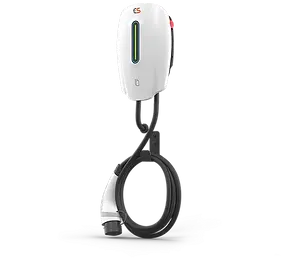
Smart, compact and reliable, wall mounted EV chargers designed for home use,
offering fast, safe & convenient charging at home. Sleek, modern styling to suit any
garage, driveway or apartment complex.
POWERING A GREENER TOMORROW

Why Choose EV Chargebox
Whether you're just starting your EV journey or managing large-scale infrastructure, our team is here to help you find the right solution. We work with leading manufacturers and maintain strict quality standards to ensure every product meets Australia’s safety and performance regulations.
Meets Australian Electric Standards


FAQ
This is a paragraph where you can add any information you want to share with website visitors. Click here to edit the text, change the font and make it your own.
How do I use the chargers?
To use an EV charger, park your car, turn it off, and plug the charging cable into your vehicle’s charge port.
At home, charging usually starts automatically, while public chargers may require a card, app, or payment to begin.
Once charging is complete, stop the session, unplug the cable, and close your car’s charge port.
What’s the difference between AC and DC chargers?
AC chargers supply Alternating Current that’s converted to DC by the car’s onboard charger, AC Chargers are ideal for home or workplace charging However charge at a slower rate than DC Chargers.
DC (Direct Current) chargers convert AC to DC inside the charging station, sending power directly to the battery for much faster charging.
AC chargers typically provide 3–22 kW, while DC chargers can deliver 50–350 kW or more.
In short, AC chargers are generally cheaper and more efficient for daily use with longer charge periods, while DC chargers are a faster way to charge you vehicle, for long trips requiring shorter charge periods, Most public or fleet fast-charging stations are DC Chargers
How fast will this charge my car?
Home chargers (AC) usually fill your car overnight.
DC fast chargers can get you back on the road in under an hour.
Can I plug this into a normal power outlet?
Yes — in Australia, you can plug some EV chargers into a normal household power outlet, but with a few important details:
A standard Australian outlet supplies 230 V at 10 amps, which gives about 2.3 kW of charging power.
Some EV Portable chargers (trickle charger - Level 1 AC Charger) come with the regular 3-pin (10amp) plug for these outlets.
At that rate, you’ll add roughly 10–15 km of range per hour, so overnight, roughly between 120 – 180km based on 12 hours of charging
For faster charging, Australians usually install a dedicated 7 kW (32-amp) wall-mounted charger on a separate circuit — this is a Level 2 AC charger and can charge 3 – 4 times faster.
Will this work on my EV?
All EV ChargeBox chargers are compatible with vehicles equipped with Type 2 plugs. A Type 2 plug (Mennekes) is the standard connector for AC EV charging in Europe and Australia. If you’re unsure whether or not your vehicle is equipped with this plug type please reach out to Sales@evchargebox.com for assistance.
Compatible Car Brands:
Audi
BMW
Hyundai
Kia
Mercedes-Benz
Volkswagen
Volvo
Peugeot
Renault
Jaguar
Nissan
Toyota
BYD
MG
Cupra
Lexus
Mazda
Subaru
Fiat
Ford
What is OCPP?
OCPP stands for Open Charge Point Protocol — it’s a universal communication standard that allows EV chargers (charge points) to talk to charging management systems or network.
What is DLB?
Dynamic load balancing is a method distributing power usage to different electric loads/equipment
Are EV ChargeBox Chargers and Accessories compliant with Australian standards?
Yes, All Chargers & Accessories sold in Australia are compliant with Australian standards.
Does EV ChargeBox sell in bulk?
Yes, please contact our friendly sales team to discuss your Bulk order requirements
Do we sell commercial quality chargers?
Yes, EV Chargebox has a range of Fast Charge free standing AC & DC chargers custom designed for commercial applications, from Cars & Trucks, to Buses and Ships. EV ChargeBox is your all-in-one solution for EV charging.
bottom of page


